
Client reporting is the monthly ritual where a social media manager translates raw metrics—likes, reach, clicks—into a business narrative that proves the retainer is worth paying.
What is client reporting?
At its core, client reporting is not about data presentation. It is about interpretation. Clients can look at their own Instagram follower counts. They pay a freelance social media manager to tell them whether that number is good, why it went up or down, and what they should do next.
A good client report acts as a proxy for a meeting. It summarizes the work done over a specific period (usually a month), measures the outcomes against the client's goals, and sets the strategy for the following period.
Why clients actually read them
Clients do not read reports to admire charts. They read them to answer a single, underlying question: "Was the money I spent on social media this month worth it?"
Data-dumping: Sending a raw spreadsheet or an automated dashboard with 40 different charts.
Narrative reporting: Sending a three-page PDF that leads with a written executive summary.
When you send a dashboard without context, you force the client to do the analysis. When you send a narrative report, you control the story.
The standard structure of a client report
While every agency and freelancer has their own template, a professional client report almost always follows a three-part structure:
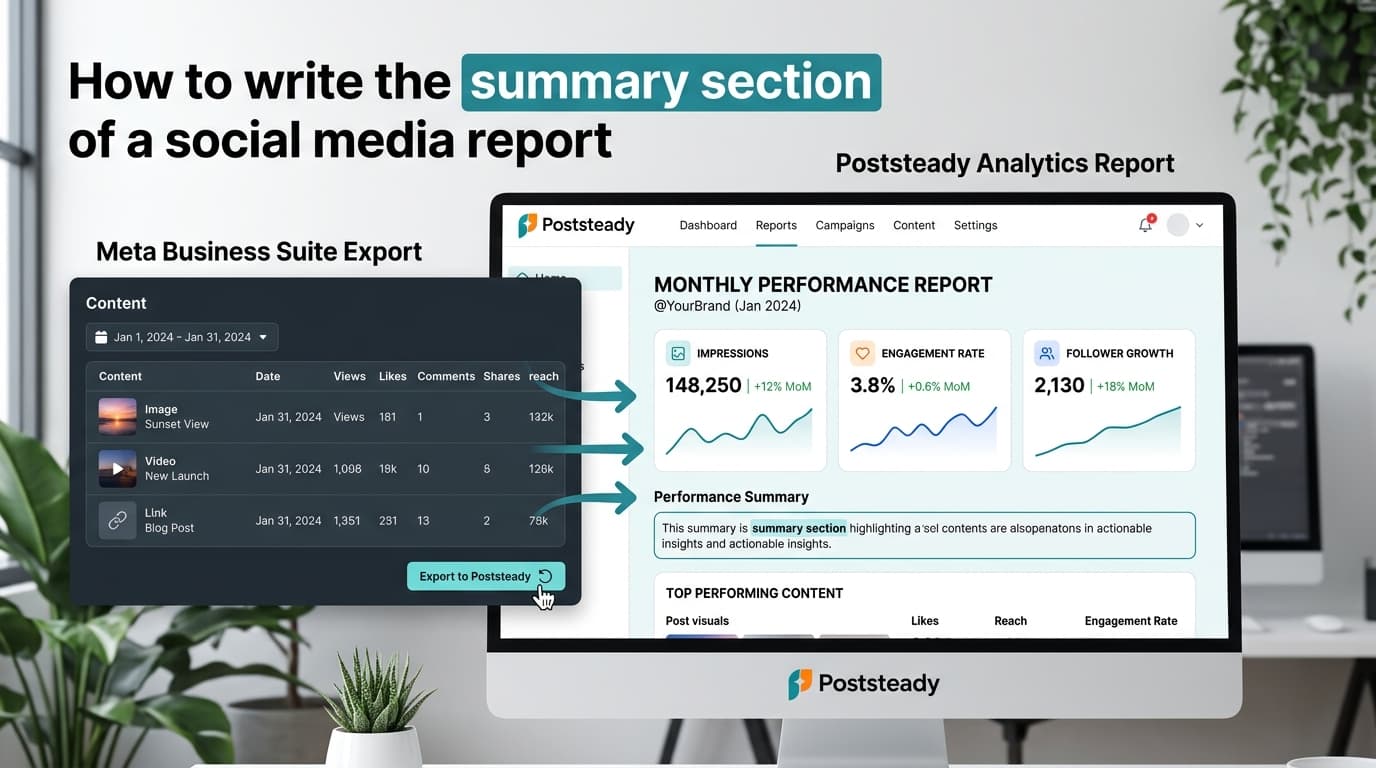
- Executive Summary: The TL;DR. One paragraph explaining the month's overall performance, accompanied by high-level metrics (Total Reach, Total Engagement, Follower Growth).
- Channel Breakdown: Platform-specific metrics. This is where you explain that TikTok drove reach while LinkedIn drove clicks.
- Strategic Recommendations: The most important section. What did you learn this month, and what will you change next month as a result?
Don't build this from scratch every month
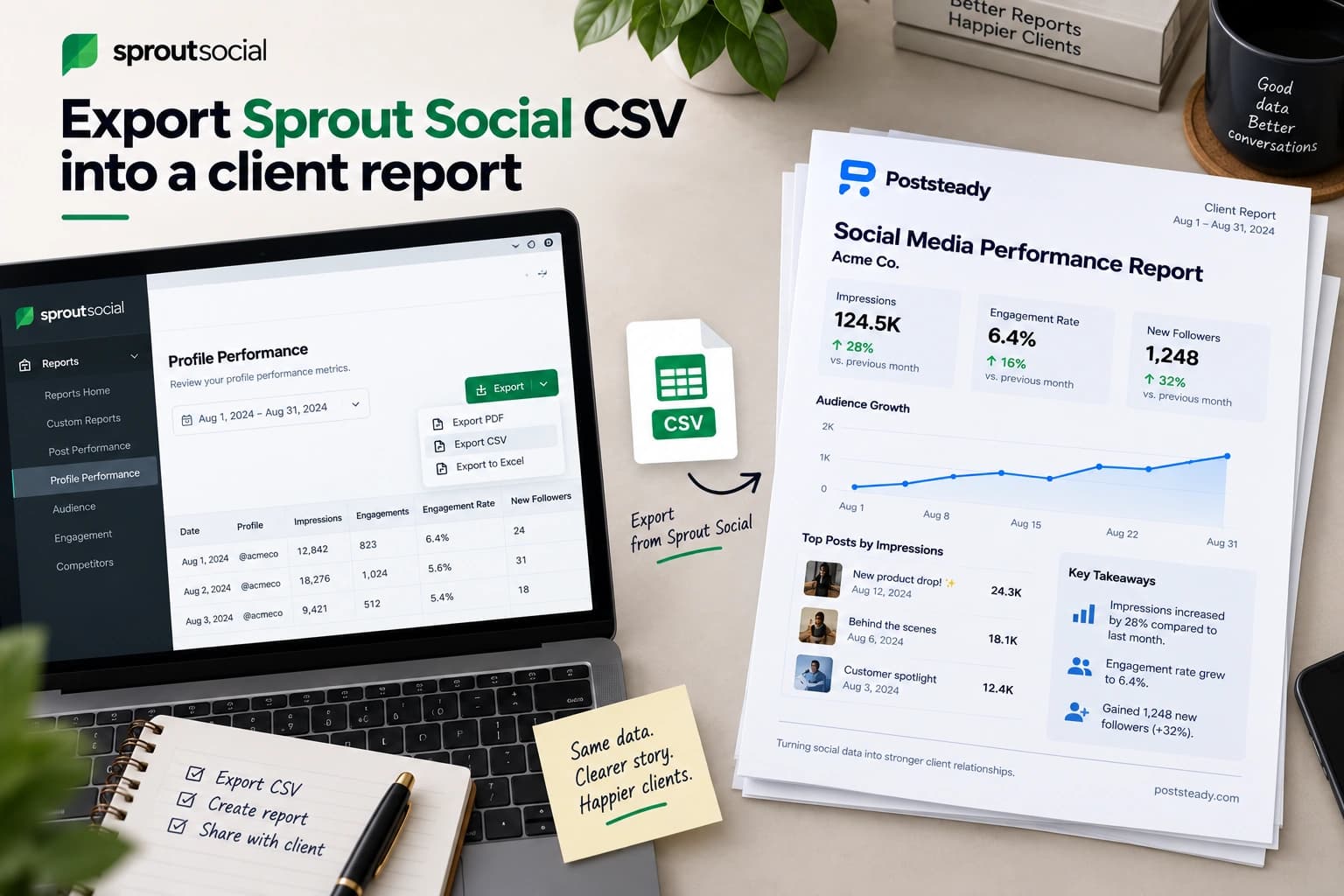
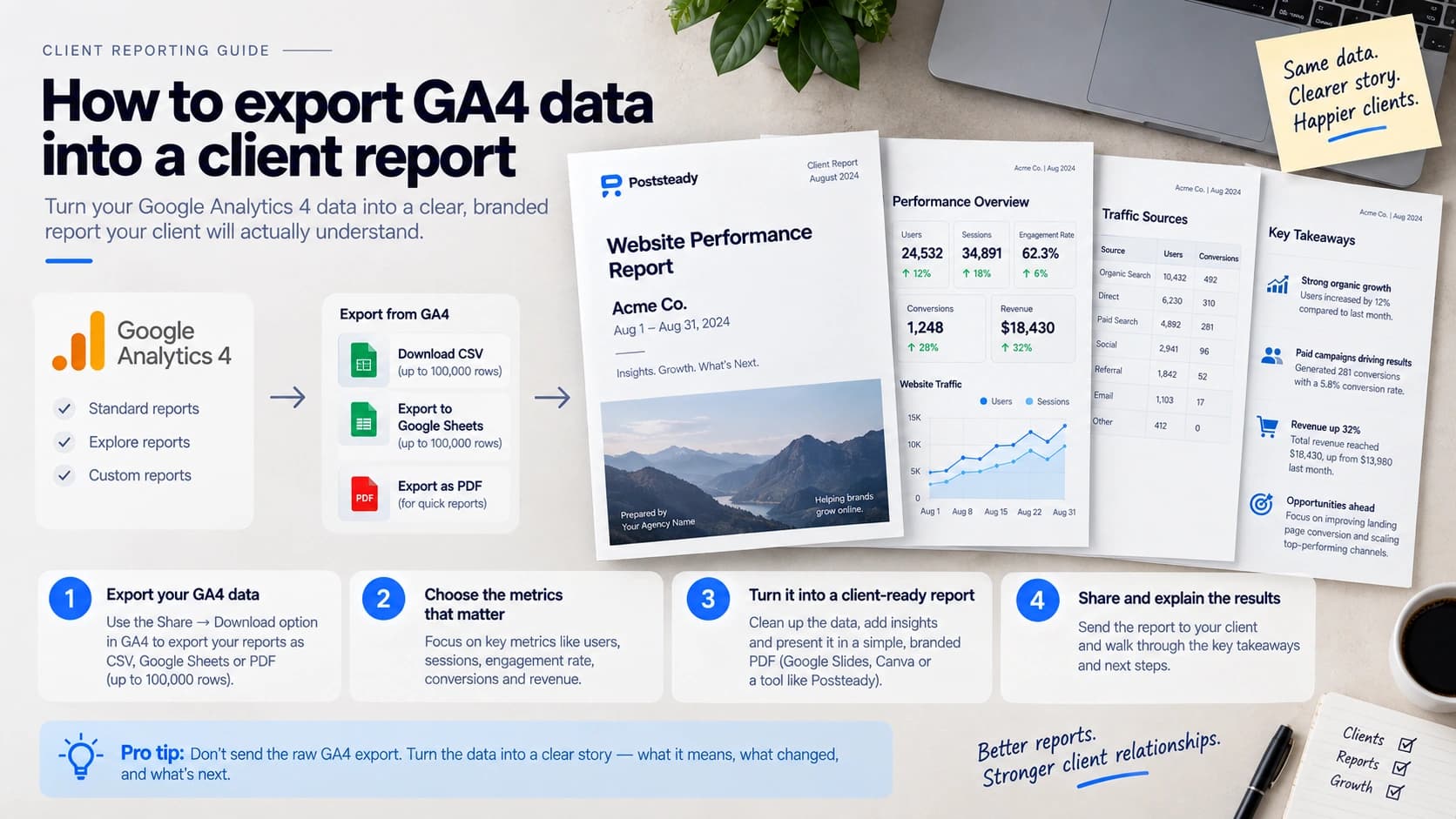
Poststeady turns your raw CSV exports into this exact three-part structure, complete with an AI-drafted executive summary.
How often should you report?
For 90% of freelance social media managers, reporting is done monthly. It provides enough time for trends to emerge without overwhelming the client with day-to-day fluctuations.
The first week of the new month is typically when reports for the previous month are generated, reviewed, and sent.
However, some agencies opt for quarterly reports to show long-term trends, especially for clients focused purely on brand awareness rather than direct response. Regardless of the cadence you choose, consistency is key. Clients should know exactly when to expect their report and what it will cover. This builds trust and positions you as a reliable partner rather than just another vendor. It also forces you, the social media manager, to regularly review your own performance and adjust strategies proactively.
Additionally, consider the format you use to deliver these reports. While some clients prefer a dense spreadsheet, most decision-makers want a clean, scannable PDF or presentation. The visual presentation of your data often matters just as much as the data itself. If a report looks professional, the client perceives the work as professional. Incorporating visual aids like charts and graphs can make complex metrics much easier to digest for stakeholders who may not be well-versed in marketing terminology.
Automate your monthly client reporting
Stop spending hours writing summaries. Upload your exports and let Poststeady do the heavy lifting.