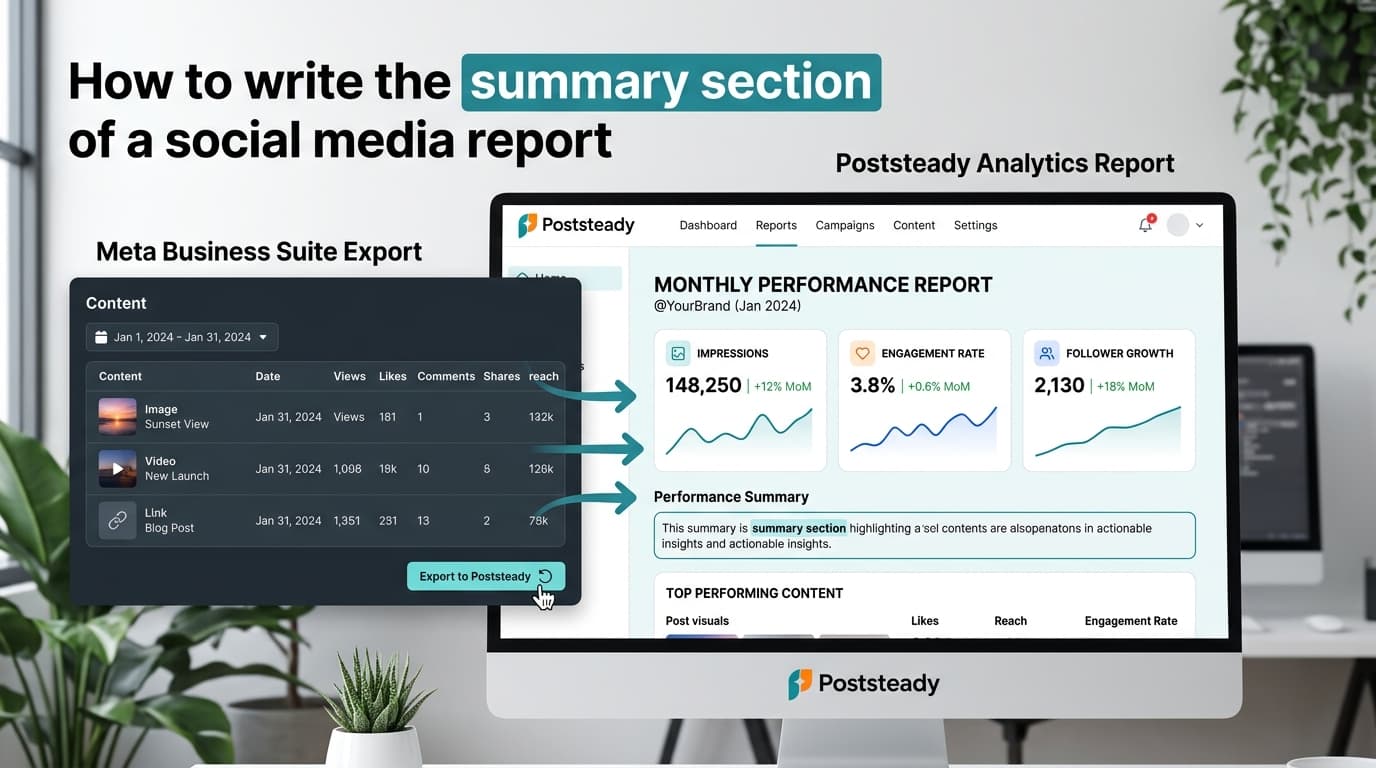

Most client reports are read in under two minutes, usually on a phone, usually right before the call. That is the constraint the whole document has to survive.
Why reports go unread
A monthly report fails for one of two reasons. Either it opens with numbers and no interpretation, so the client has to do the analysis themselves, or it opens with so much interpretation that the numbers look like they are being hidden. Both send the client to the one place you do not want them: the follower count.
The fix is order. Lead with the sentence you would say out loud if the client asked how the month went, then show the numbers that back it, then say what you are doing next.
The three-page order
Keep the same order every month. Clients learn where to look, and questions drop off after the second or third report.
Your branding, the period, one sentence on the month, and the headline numbers each against last month. A number without a comparison is not information.
Each channel broken out on its own terms. Averaging Instagram and LinkedIn into one line hides the thing the client is paying you to see.
What worked and why, what to watch, and three or four actions specific enough to approve on the call without another email.
Skip building this from scratch
Upload your export and Poststeady lays it out in this exact order, ready to edit.
Writing about numbers
Every metric line should answer why, not just what. Compare the two versions of the same result:
Reach was up 12.4% this month, and engagement was up 8.1%.
Reach rose 12.4% on four midweek videos, and engagement followed at 8.1%, so growth came from more people seeing the work rather than one viral post.
The second version names the cause and rules out the alternative. That is the sentence a client repeats to their own boss.
Handling a bad month
Do not bury a decline, and do not lead with it either. Put it after the headline result, state the size of the drop, name the likely cause, and pair it with the change you are making. A watch-out written in the same steady tone as the rest of the report reads as command of the account, not as an apology.
New follows fell 3% against June. The two carousels that drove most of June's follows had no equivalent in July, so two are scheduled for the first half of August.
Let Poststeady write the watch-out
It drafts the cause and the fix from your numbers, in the same tone every month.
Ending with a plan
Close on actions, not a summary of the summary. Three is usually right, four at most, each one specific enough that the client can say yes on the call:
- Two carousels in the first two weeks, both menu led.
- Hold video at four per month, keeping the midweek slot.
- Test one LinkedIn post per week to see whether the channel earns its place.
Written this way, the report does the work of the call before the call starts. The meeting turns into approving a plan instead of explaining a chart.
Write this report from your own export
Poststeady drafts the headline, the watch-out, and the plan, then hands you the text to edit.